
Every Minute Matters: How to Manage Time in Virtual School

Time management is one of the biggest hidden skills virtual school asks of students, and it's rarely taught directly. The good news is that it's a skill, not a personality trait, which means it can be built with the right tools and a little practice. Time management skills gained in online learning can develop a vital skill that will benefit students long after they graduate.
So let’s learn how to help your student stay on time, on task, and build habits for the future.
Why Is Time Management Harder in Virtual School?
Without a bell schedule or a teacher physically moving the class from one activity to the next, students have to generate their own sense of structure. That is a genuinely difficult skill, especially for younger students or those who process time differently. The fix isn't more willpower. It's making time and tasks visible, instead of expecting a student to track it all mentally.

Time Management Looks Different at Every Age
A time management strategy that works for a high schooler will likely overwhelm a second grader, and one built for a young student may feel condescending to a teenager. A rough guide:
Elementary students benefit from external structure provided mostly by a parent; visual timers, picture-based checklists, and short, clearly bounded work periods.
Middle schoolers are ready to start owning parts of the system themselves, with a parent still checking in regularly. This is often the age where a student's first real planner or calendar gets introduced.
High schoolers benefit most from choosing their own system and being trusted to run it, with parents shifting into a lighter-touch, "ask how it's going" role rather than managing the details directly.
Wherever your student falls, the goal is the same: gradually shift ownership of time management from parent to student over the years, so that by graduation, it's a skill they've genuinely built themselves, not one they're still borrowing from a parent.
Make Time External, Not Just Mental
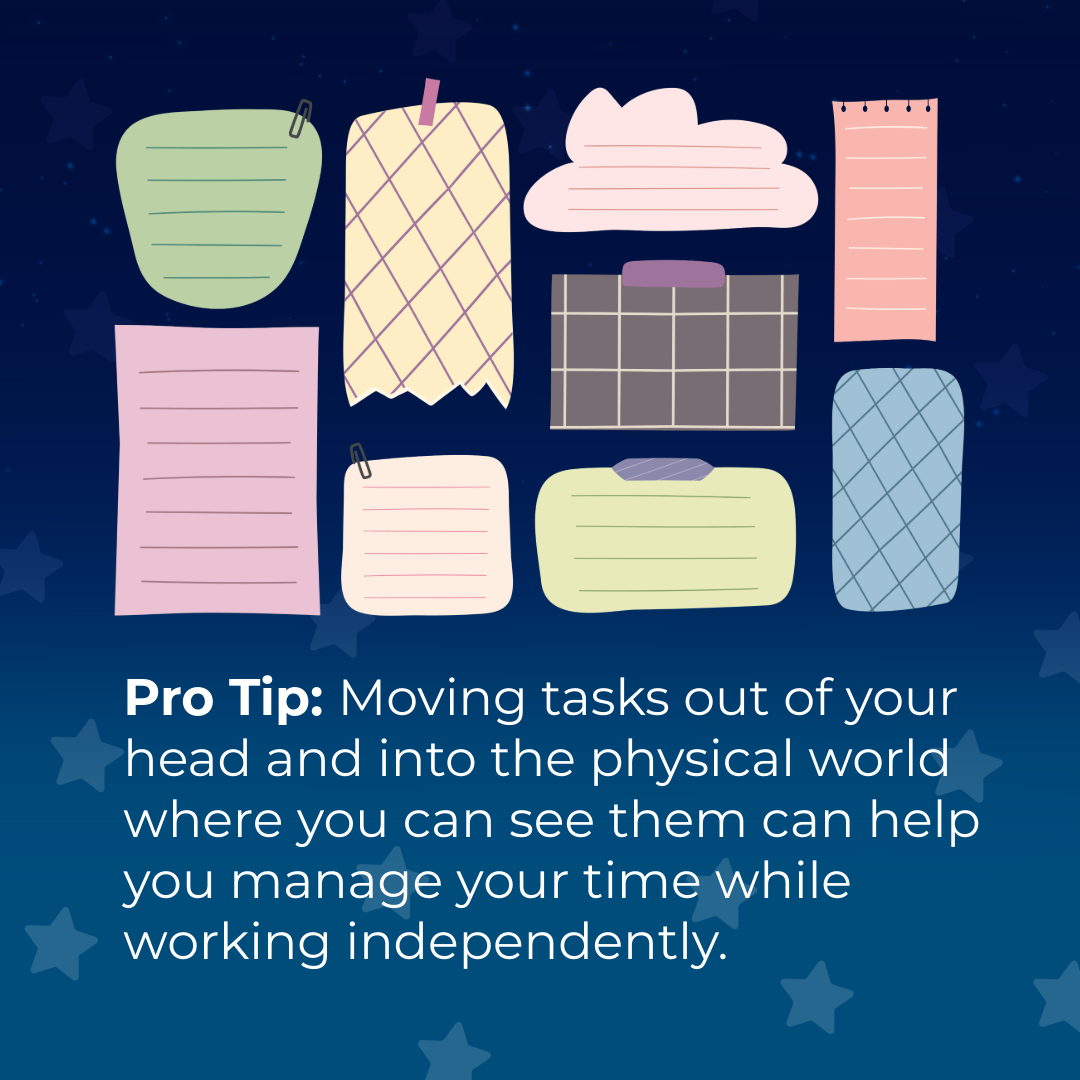
According to ADDitude, one of the most effective strategies for managing time and tasks is making them both external; moving them out of your head and into the physical world where you can see them. A few practical ways to do this:
Visual task tracking: Sticky notes, index cards, or a whiteboard list of what's due today
Visible timers: A physical or app-based timer that shows time passing, rather than trusting an internal sense of "it's probably been 20 minutes"
External motivation: Simple accountability systems — a point system, a shared checklist with a parent, or even a report-card-style check-in — that reinforce sticking with the plan
This isn't just useful for students who've been formally diagnosed with attention or executive function challenges. Nearly every student benefits from making time and priorities visible rather than trying to hold them all mentally.
Structure Your Day Around Focus, Not Just the Clock
Two things determine how productive a study session actually is: how many hours are spent, and the quality of those hours. Three unfocused hours of scrolling between tabs accomplish far less than one genuinely focused hour.
The University of Washington's academic skills resources recommend starting by simply tracking how a typical day is actually spent, not how you assume it's spent. From there:
Notice when focus comes easiest (morning, afternoon, or evening) and protect that window for the hardest academic work.
Identify the natural "lull" period in the day (often mid-afternoon) and use it for lower-effort tasks, movement, or a break instead of forcing focus that isn't there.
Compare how time is actually being spent against what actually matters, and adjust from there.
Try a System That Fits How Your Student Thinks
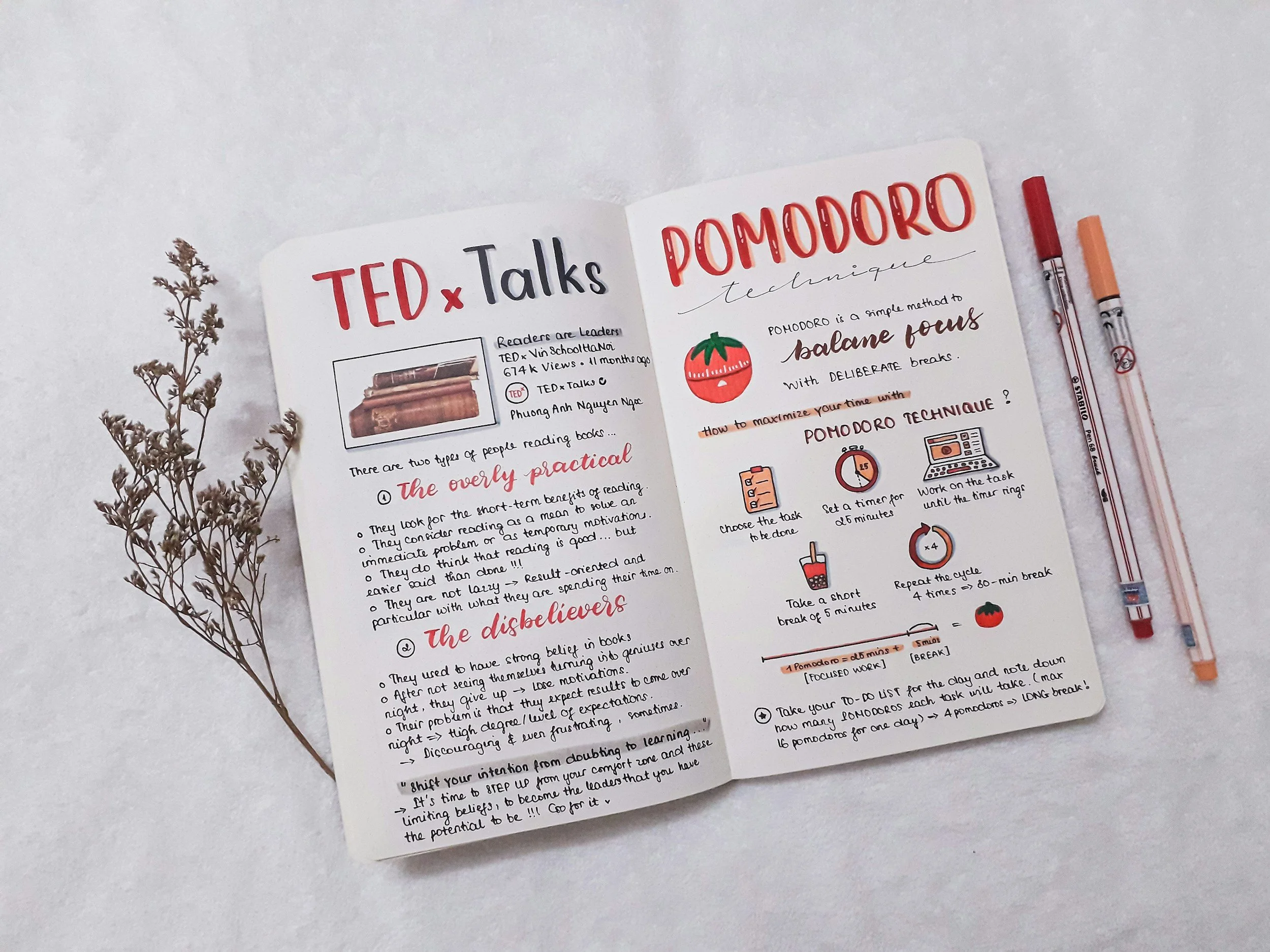
Not every time management strategy works for every student. A few worth experimenting with, drawn from Penn LPS Online's overview of proven techniques:
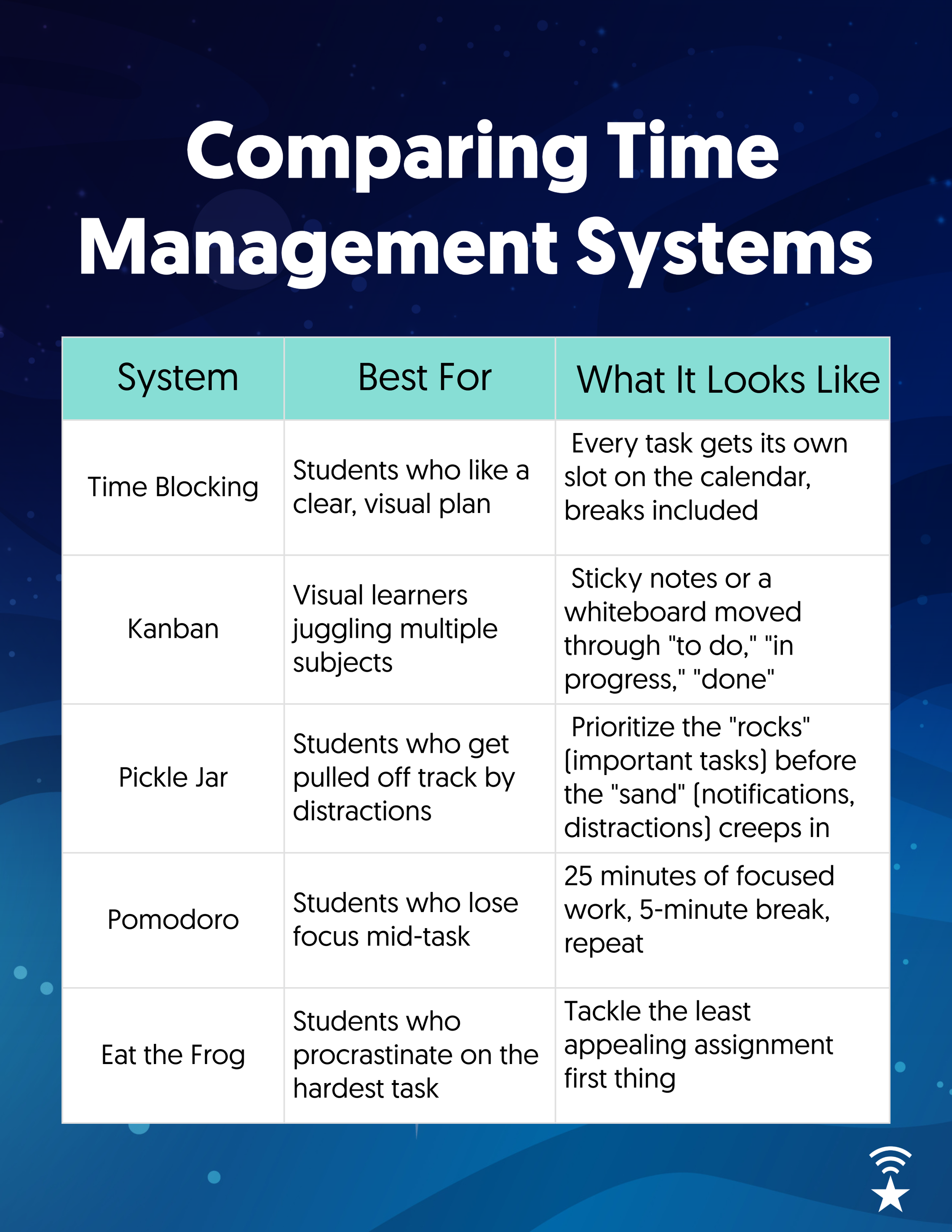
Time blocking: Assign each task its own dedicated slot on the calendar, breaks included — great for students who do best with a clear visual plan for the whole day.
The Kanban technique: Use columns — "to do," "in progress," "done" — on a whiteboard or sticky notes to track tasks visually. Especially useful for visual learners or students juggling several subjects at once.
The Pickle Jar method: Picture a jar with rocks (the most important tasks), pebbles (things that can wait), and sand (distractions like notifications). Tackle the rocks first, and don't let the sand fill up the jar before the important stuff gets in.
There's no single "right" system. The best one is whichever your student will actually use consistently.
Signs a System Is Working
You'll know a time management approach is a good fit when:
Assignments get started earlier in the week instead of the night before
Your student can tell you what's due without checking three different places
There's noticeably less last-minute stress around deadlines
Breaks happen on purpose, not just when focus completely runs out
If a system isn't sticking after a couple of weeks, that's useful information. Try a different one rather than assuming the student simply isn't trying hard enough.
A Weekly Time Audit You Can Try
If you're not sure where your student's time is actually going, a simple audit can be more revealing than weeks of guessing.
Pick a representative day. Choose a typical school day, not an unusually busy or unusually light one.
Track everything in rough blocks. Every hour or half hour, jot down what actually happened, not what was supposed to happen.
Sort the results into categories. Academic work, breaks, meals, screen time that wasn't schoolwork, and everything else.
Compare the totals to your priorities. Does the actual time spent line up with what matters most, or is there a gap worth addressing?
Make one small change, not ten. Pick the single biggest gap and adjust just that one thing for the next week before layering on more changes.
This kind of honest audit, done without judgment, often reveals surprisingly simple fixes: a homework block that keeps getting swallowed by a "quick" phone check, or a peak-focus hour that's currently being spent on the easiest, least important task of the day.
Frequently Asked Questions

How long does it take for a new time management system to actually stick?
Give any new system at least two full weeks before deciding whether it's working. The first few days almost always feel clunky — that's normal, not a sign of failure.
What if my student resists using any kind of planner or checklist?
Start smaller than feels sufficient: a single sticky note with today's top three tasks is often an easier entry point than a full weekly planner. Build the habit before adding complexity.
Is it bad if my student needs a timer for everything?
Not at all. External tools like timers aren't a crutch, they're a legitimate strategy that plenty of highly successful students and adults rely on permanently, not just while building a habit.
Comparing the Systems at a Glance
There's no wrong choice here. The right system is whichever one actually gets used, week after week.
A Few Time Management Myths Worth Retiring
"Good students just naturally manage their time well."
Time management is a learned skill, not an innate trait. Even highly capable students often need tools and practice to build it.
"More hours studying always means better results."
Quality of focus matters more than raw hours. A focused 45 minutes often beats a distracted two hours.
"Needing a timer or checklist means something's wrong."
External tools are a legitimate, permanent strategy for plenty of highly successful people, not a training wheel to eventually discard. Time management skills learned at Stellar Pines can go on to work for students well into their professional life.
"If a system worked for one student, it'll work for another."
Every student's brain is a little different. Trying more than one system before settling on "the" approach is normal, not a failure.
Time Management Is a Skill, Not a Character Trait
Every student can get better at managing their time with the right structure in place. Making time and tasks visible, protecting focus during peak-energy hours, and choosing a system that actually fits how your student thinks turns time management from a source of stress into a genuine strength, one that will serve them well beyond this school year.
Ready to help your student master their time and their school year? Enroll Today
Questions? Our enrollment specialists are here to help: Call Today!
Follow us for more time management tips: Facebook | Instagram | TikTok

Sources
ADDitude, Treatments and Strategies for Weak Executive Functions.additudemag.com
University of Washington, Disability Resources for Students, Structuring Your Day.washington.edu
Penn LPS Online, Mastering Your Schedule: Effective Time Management Strategies for Success.lpsonline.sas.upenn.edu
